Digital Dentistry at BAU Dental Hospital: Use of Advanced Technology from Diagnosis to Treatment
General
28 Jul 2026
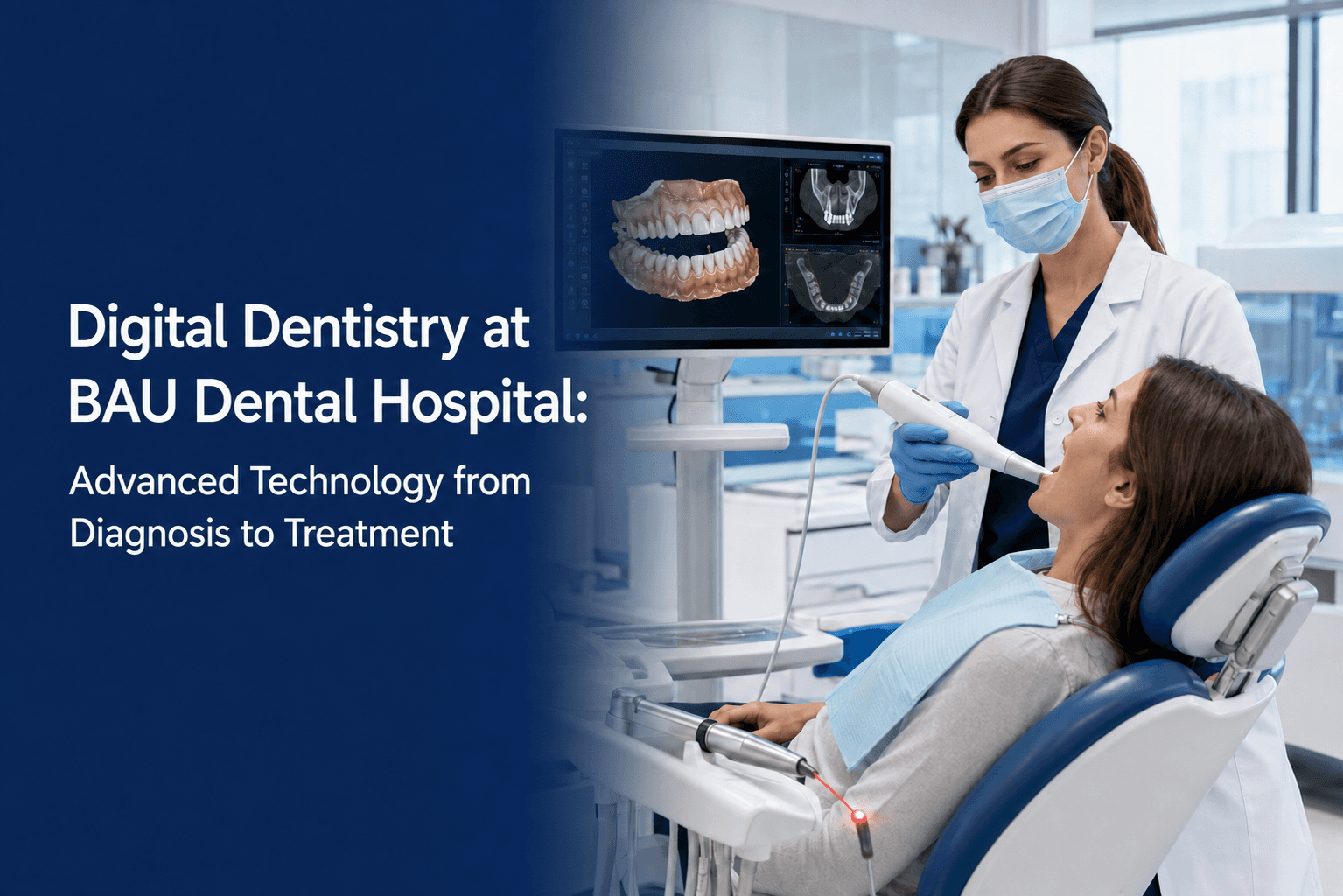
The use of technology in dentistry makes patients' diagnosis and treatment processes more comfortable, more planned and more predictable. Alongside traditional methods, digital imaging, intraoral scanning, laser applications and advanced clinical systems are among the important parts of the modern dentistry approach. BAU Dental Hospital also addresses this structure with a holistic service approach extending from diagnosis to treatment.
Digital dentistry covers technologies that help evaluate the patient's oral and dental structure in more detail. Two-dimensional imaging systems, three-dimensional dental tomography, intraoral scanners and digital planning processes contribute to the physician creating a patient-specific treatment approach. In this way, not only is the existing problem detected, but the treatment process can also be planned more clearly.
The advanced imaging infrastructure used at BAU Dental Hospital offers an important advantage, especially at the diagnostic stage. Many areas such as teeth, jawbone, sinus structures, impacted teeth, implant planning and surgical fields can be evaluated more comprehensively with advanced imaging systems. This approach both supports the clinician's treatment decision and helps the patient follow the process in a more understandable way.
Another important area of digital dentistry is intraoral scanning technologies. Intraoral scanners, used as an alternative to traditional impression-taking methods, enable the digital modelling of the patient's oral structure. This data can be used for orthodontic treatments, clear aligner applications, prosthetic designs and restorative procedures. Thus, the treatment plan can be prepared in a more precise, faster and more patient-oriented manner.
Laser technologies are also among the prominent applications in modern dentistry. The use of lasers in gum treatments, soft tissue procedures and some surgical applications can offer a more comfortable experience for the patient. Especially in terms of bleeding control, procedure sensitivity and the healing process, laser applications can provide significant support.
Digital dentistry at BAU Dental Hospital does not only mean the use of technology; it is a holistic approach that ensures more systematic progress in diagnosis, planning, treatment and follow-up processes. This structure creates both a more understandable treatment experience for patients and a stronger clinical decision-making infrastructure for clinicians.
In conclusion, digital dentistry is establishing a new standard in oral and dental health services. BAU Dental Hospital’s technology-supported approach provides a modern treatment experience offering more precise and better-planned solutions to patients' needs.