From Digital Impression to Design: How Intraoral Scanners and CAD-CAM Are Used in Dentistry?
General
25 Aug 2026
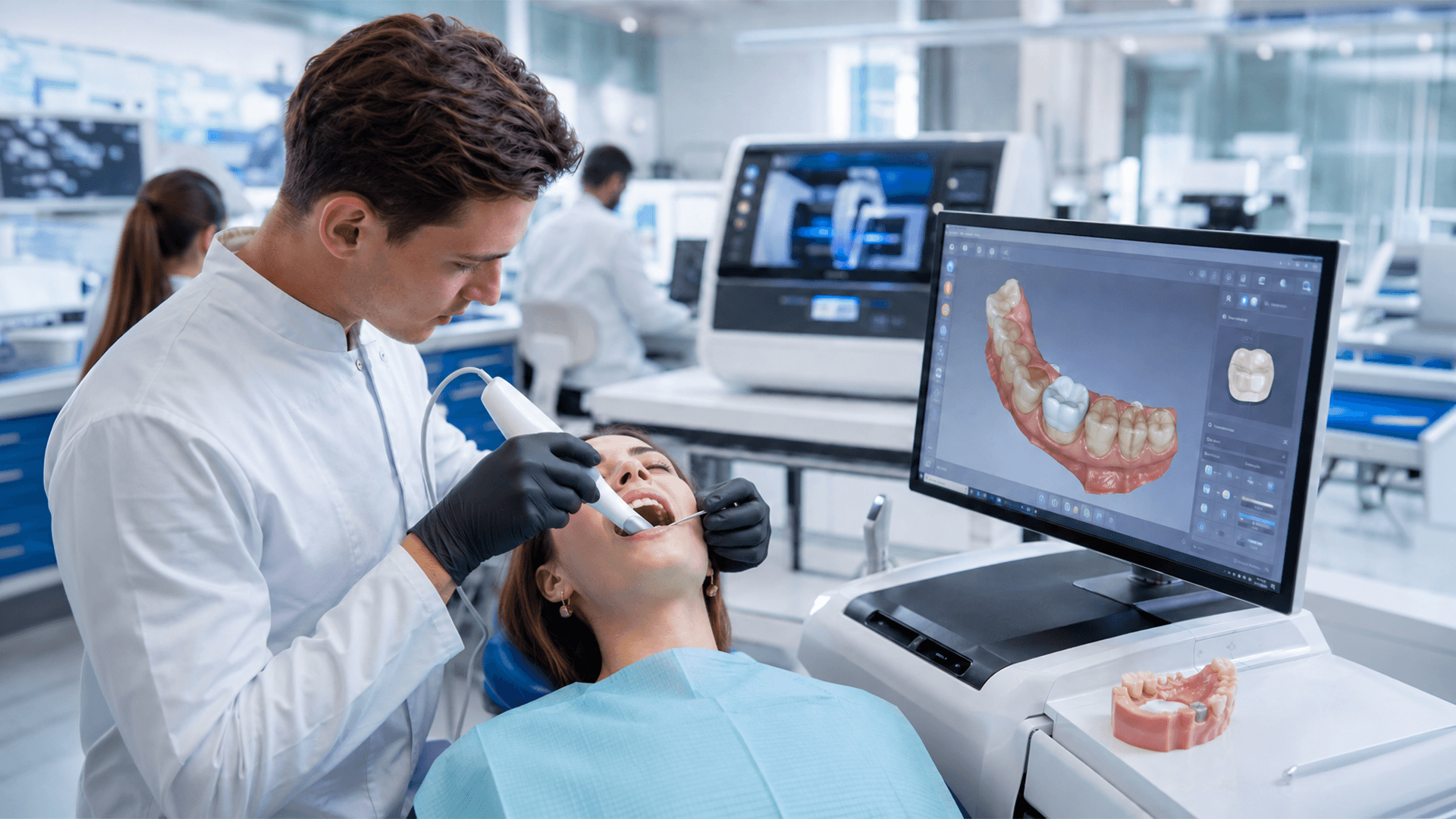
Digital technologies are used in dentistry in many stages, from recording the patient's oral structure to designing the restorations. Prominent tools of this transformation include intraoral scanners and computer-aided design and manufacturing systems. These systems, referred to as CAD-CAM, are among the key components of digital dentistry applications. Bahçeşehir University (BAU) Faculty of Dentistry also offers an educational infrastructure that enables students to actively use intraoral scanners, CAD-CAM systems and related computer software in their preclinical and clinical training.
The primary function of intraoral scanners is based on recording the structures within the mouth in a digital environment. Thus, the obtained data can be evaluated in a computer environment and transferred to the subsequent stages of the digital workflow. Academic studies carried out within BAU also examine different application areas of intraoral scanners. In studies involving Bahçeşehir University researchers, subjects such as the effectiveness of intraoral scanners in shade determination processes and their accuracy in digital impression applications are investigated.
Following the digital impression, another stage of the process consists of CAD-CAM technologies. CAD refers to computer-aided design, while CAM refers to computer-aided manufacturing. Data acquired digitally can be used in restoration design through appropriate software. CAD-CAM restorations are also among the practice areas of the Bahçeşehir University Department of Restorative Dentistry. In the university's academic curriculum, it is aimed for students to become familiar with the fundamental properties of CAD-CAM materials and to be able to select appropriate areas of application.
Integrating these technologies into dental education allows students to go beyond learning the digital workflow solely through theoretical knowledge. In the Digital Dentistry Laboratory of the BAU Faculty of Dentistry, students are aimed to work with intraoral scanners, CAD-CAM systems and software compatible with these systems during their preclinical and clinical practice training. In the university's educational approach, clinical dentistry software and VR/AR applications are also among the digital education components.
This way of working, extending from intraoral scanning to digital design, demonstrates how technology and clinical practice come together in dentistry. Students who are introduced to digital tools at an early stage in the BAU Dental Campus educational environment can experience the working principles of different systems in a hands-on manner. Consequently, digital dentistry does not remain merely a field of technology consisting of devices used; it transforms into an educational process that establishes a connection between impressions, design, material knowledge and clinical practice.